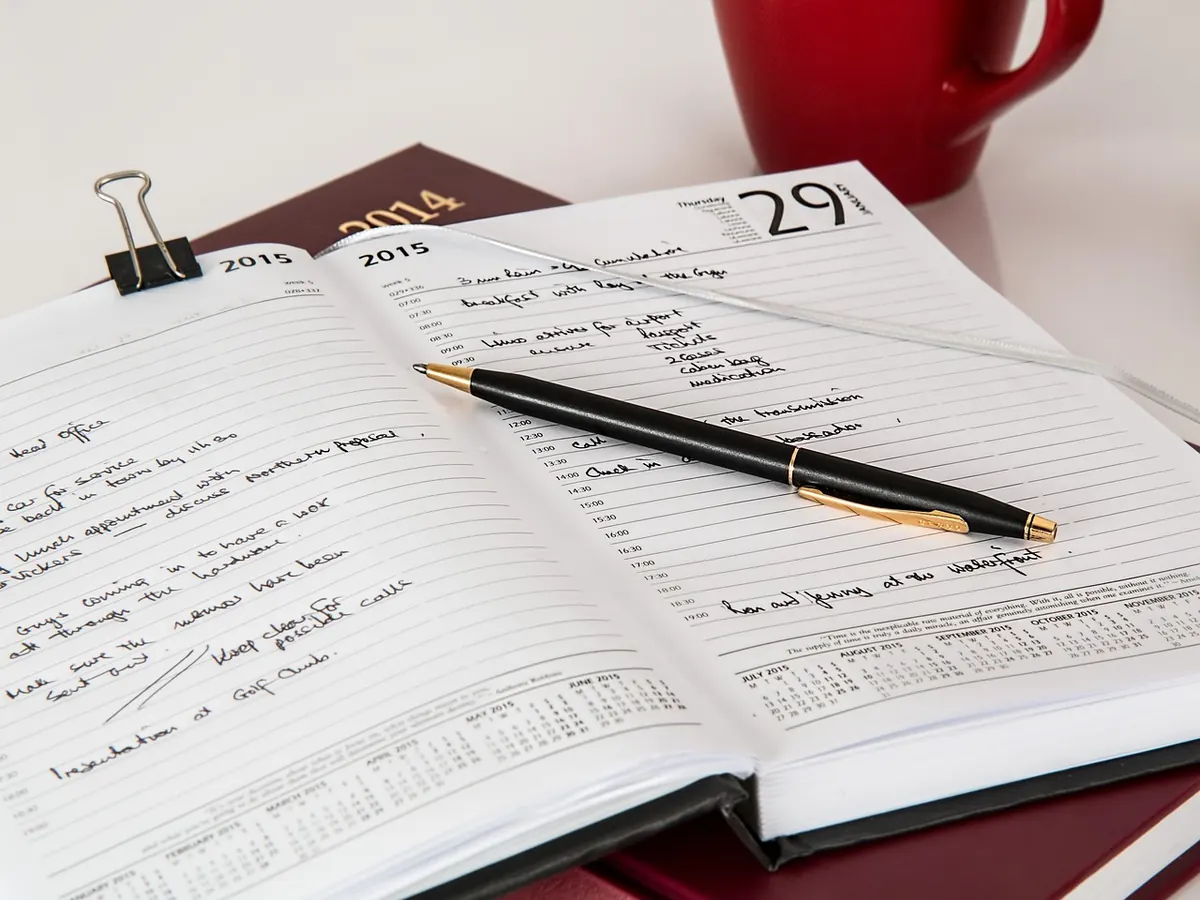
The first page of a new notebook is oddly intimidating. It sits there, clean and expectant, and the pressure to write something worthwhile makes the whole idea feel faintly ridiculous. Plenty of journals bought with good intentions are abandoned by February, usually not through laziness but through aiming too high. Ten minutes a day is a realistic target — not because ten minutes is magic, but because it is small enough to survive a bad week.
Start Smaller Than Feels Sensible
Most journaling advice assumes you want to fill pages of reflection every evening. You don't. An entry can be three or four sentences, or one line: Tired. Argued with the plumber. Good sandwich. That counts.
Value comes from repetition, not length. Two hundred short entries will tell you more about your year — what you worried about, what you enjoyed, what kept returning — than a handful of long, solemn ones written in January and never repeated. So set the bar low, write for ten minutes, and stop even if you're enjoying it. Leaving something unfinished makes it easier to come back tomorrow.
Choosing a Notebook You'll Actually Use
Don't buy the beautiful leather one unless you know you'll use it. Cheap and close to hand beats expensive and put away. A reporter's notebook in your coat pocket will collect more entries than a hardback on a shelf upstairs.
Paper or screen?
Paper has one clear advantage: nothing dings at you while you write. But if you type far faster than you write, or you always have your phone and never a pen, a notes app is a legitimate journal. Some people do both — a page at home, a few lines on the phone at lunchtime. The medium matters far less than whether you open it.
Three things worth checking before you buy
- Size. Pick one that fits the bag you actually carry. A5 is a good middle ground.
- Binding. A notebook that won't lie flat is the enemy of a short session. Test it before you buy.
- Lines. Narrow ruling suits small handwriting, wide suits sprawling, plain suits lists and sketches. None of them is the right choice.
Keep a pen with the notebook, and decide where it lives: bedside table, kitchen drawer, work bag. If you have to go looking for it, you'll skip it.
Attach the Ten Minutes to Something You Already Do
Habits tucked behind existing routines last longer than ones pinned to a clock. "I'll journal at eight o'clock" is easy to postpone; "I'll journal while the kettle boils" is much harder to avoid.
- After your first coffee, before you look at your phone.
- On the train or bus, instead of scrolling.
- During your lunch break, at the same table.
- Last thing at night, once your teeth are brushed.
Pick one anchor and keep it boringly consistent. If evenings are hopeless, move it to the morning — journaling doesn't belong to the end of the day.
One note on privacy: decide in advance whether anyone may read it. If the answer is nobody, say so out loud to the people you live with. A journal written for an audience isn't much use.
What to Write in Your First Entry
Ignore "Dear Diary". Nobody is marking this. If you don't know where to start, answer two or three of these, in whatever order they arrive:
- What happened today that I'd otherwise forget by next week?
- What's taking up the most room in my head?
- What am I looking forward to, however small?
- What went better than I expected?
- What would I say if I were telling a friend about today?
Write quickly and don't correct yourself. If you stall, write about stalling: I don't know what else to say, so I'll describe the kitchen. That usually gets things moving again.
What a Real Entry Looks Like
Here's an ordinary entry, and an entirely sufficient one:
Rained all morning. Took the bus because I couldn't face the walk. Spent most of the afternoon on the spreadsheet I've been avoiding, and it took ninety minutes, which is annoying. Nadia rang about the weekend. I said yes even though I'd half-hoped to do nothing. Feeling flat, but not in a bad way — just quiet. Tomorrow: finish the report, buy bread.
There's no insight in it, no tidy ending, nothing profound. Over months, entries like this build into a record of an ordinary life, which is exactly what a journal is for.
When You Miss a Day, or Two Weeks
You will miss days. The aim isn't a perfect streak; it's avoiding the long gap that turns into stopping altogether. A simple rule helps: never miss twice in a row.
Don't try to catch up, and don't write a long apology to the notebook. Pick it up, write four sentences about today and carry on. For difficult weeks, keep a two-line fallback ready: one thing that happened, one thing you noticed.
A note on wellbeing: journaling can bring up uncomfortable feelings, especially if you're going through a hard time. Writing about them often helps, but it isn't a substitute for proper support. If low mood or anxiety is lasting, or getting in the way of daily life, speak to your GP.
Your First Ten Minutes
Tonight, or tomorrow morning if that suits you better: choose a notebook that fits in your bag, put a pen with it, and leave it where you already sit. Set a timer for ten minutes and write four sentences answering one of the questions above. Stop when the timer goes, even if you'd like to continue.
Then do it again tomorrow. That's the whole method — a small notebook, a fixed moment in the day, and a bar low enough that a tired version of you can still clear it.
Photo: Pexels / Pixabay