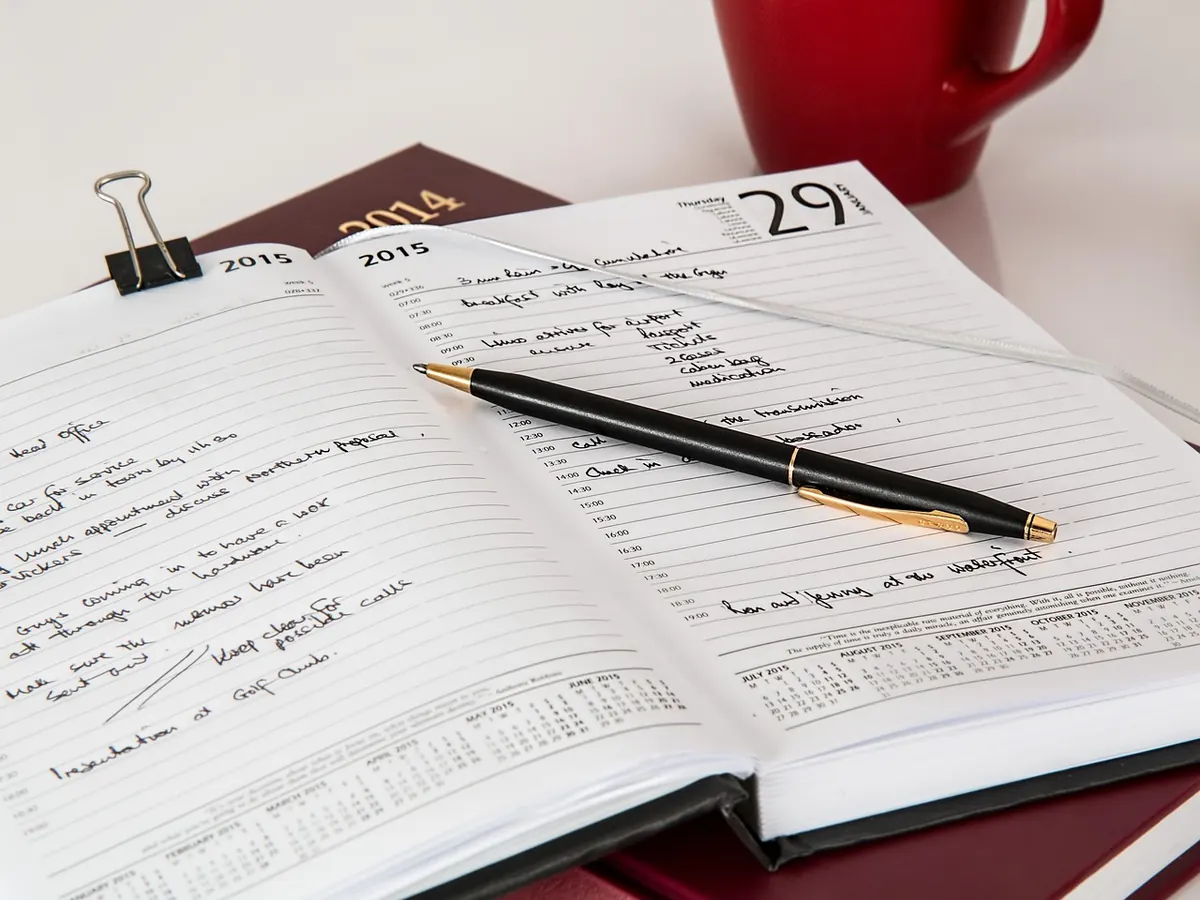
Gratitude journaling has a reputation problem. Between the linen-bound notebooks and the advice to fill three pages before breakfast, a simple practice has been dressed up as a project. That is fine if you have the time. Most people do not.
The version that survives a busy week looks far less impressive: three lines, two minutes, attached to something you already do every day. What follows is a five-step routine built for people with school runs, late meetings and evenings that vanish. It is deliberately small, because small is what lasts.
Why Simplicity Beats Ambition
A gratitude journal is not a diary, a memoir or a self-improvement programme. It is a place to record what went right, so your attention has something to land on besides what went wrong.
Long entries feel meaningful, but they raise the bar. You miss a day, then two, then feel vaguely guilty every time you see the notebook, and eventually stop. Three short lines a day will teach you more about your own life than one beautiful page a fortnight. The aim is not good writing; it is noticing, regularly, in a way you can keep up on a tired Tuesday.
Step 1: Anchor It to a Habit You Already Have
New habits rarely survive on willpower. They survive by borrowing the momentum of something established. Choose one existing moment and make the journal part of it:
- the kettle boiling in the morning
- the last cup of tea before bed
- sitting down on the bus or train
- plugging your phone in to charge at night
- locking the front door when you get home
Be precise about the trigger. "In the morning" is too vague; "after I put the mug in the sink" is a cue you cannot miss. Keep the journal where the cue happens — beside the kettle, on the bedside table, in your coat pocket. If you use a notes app, put it on the home screen and turn notifications off, or the phone will win.
Step 2: Keep It to Three Lines or Fewer
Three lines is enough to be specific and short enough to finish. Specificity is where the value sits. "My family" says nothing; "Sam rang at lunch just to chat" gives you something to picture months later. "The sun on the kitchen floor while I made coffee" brings back a whole morning.
Try not to reach for the same three things every night — family, friends, health. They may well be true, but repetition stops you looking. Add a detail instead: who was there, what was said, what it sounded like. Half-formed notes are fine. "Bus on time. Rosa's laugh. Cold water after the run." That counts.
Step 3: Use Prompts That Fit the Day You Have Had
Blank-page freeze is normal. Keep a short list of prompts and rotate through them rather than starting from nothing each evening:
- Three things that went better than expected.
- One person who made today easier.
- Something ordinary that worked: hot water, a full tank, a quiet hour.
- A moment I would happily live again.
- Something I would have missed if I had not slowed down.
- One thing that got me through a difficult hour.
Pick one prompt, answer it in three lines, and stop. You do not need to use them all.
If the day was genuinely bad
Do not force it. Writing "today was awful and I am glad it is over" is honest, and honesty keeps the habit alive. Then add one small true thing: the colleague who covered for you, the heating coming on, the walk that cleared your head. Manufactured gratitude reads badly even to yourself, and it is a fast route to abandoning the notebook altogether.
It is worth saying plainly that a gratitude journal is a reflective habit, not a treatment. If low mood, anxiety or exhaustion is sticking around, speak to your GP or another qualified professional rather than expecting a notebook to carry it.
Step 4: Give It Two Minutes and Stop
Set a timer for the first week, just to see how long three lines actually take. Usually it is under two minutes. Then stop, even if you have more to say.
Stopping while it still feels easy is what keeps the habit warm; a task that always expands is a task you will start avoiding. If you want to write properly about your day, that is a different practice — keep a separate journal for it, or write your gratitude lines first and carry on only if you genuinely have the time. Do not edit as you go. No one is marking it.
Step 5: Read It Back Once a Week
Choose a fixed moment — Sunday evening, Friday lunch, whenever you are already sitting still for five minutes — and read the past week. This is the step most people skip, and it is where the useful part happens.
Look for patterns. Are the same two people appearing? Are most entries about being outdoors, finishing something, or a quiet half hour? Those repeated lines are telling you where your good days come from. Highlight one entry that stands out and keep a note of it somewhere else if you like.
Reading weekly also removes the pressure of a daily streak. You are reviewing a week, not keeping score, so a missed Tuesday is simply not a problem.
Making It Stick
Keep the setup boring and the rules loose. If you miss a day, do not double up — just write today's three lines. If you miss a fortnight, start again with one line. There is no debt to repay and no one checking.
On low-energy days, a single word is enough: "Tea." "Rain stopped." "Anna." While travelling, use the notes app and transfer anything worth keeping later. Whether you prefer paper or screen matters far less than whether you will actually open it.
The whole routine, in brief:
- Pick a trigger you already do every day.
- Keep the notebook or app exactly where that trigger happens.
- Write three lines or fewer, with one specific detail.
- Stop after two minutes.
- Read the week back on a fixed day.
A gratitude journal does not need to be beautiful or thorough. It needs to be open. The one still being written in three weeks' time is doing more for you than the perfect one that stopped on day four.
Photo: AeroLeafStudio / Pixabay