You will not remember the smell of your grandmother's kitchen. Not in ten years, not in five. What stays is a general impression — warm, busy, faintly sweet — and a vague sense that you were happy there. The details that made it real go first. So do the ordinary ones: how your dad stacked the washing-up, the exact route you walked to school, what you were worrying about on a wet Tuesday in November.
A memory journal isn't a life story. It's somewhere to put the small, specific things before they blur. What follows is a checklist of fifteen details worth recording, and a method for capturing them that takes about five minutes.
Start with what you could still hear and smell
Senses are the quickest route back. One smell can drop you into a room you'd forgotten you'd ever stood in. When you sit down to write, don't begin with the plot. Begin with the physical stuff. It feels trivial while you're doing it and reads far better later.
- 1. Sound. The kettle clicking off, a gate latch, a particular ringtone, the radio in the car, the noise someone else's house made at night. Note the background too: traffic, a dog two gardens over, the washing machine on its final spin.
- 2. Smell. Cut grass, sun cream, woodsmoke, wet coats drying on a radiator, a specific soap. If you can't name it, describe it — "like pencils and old paper".
- 3. Light and weather. Low winter sun across a kitchen floor, rain running down a bus window, the colour of the sky at half four. Add the time of day. "Evening, still light" says more than you'd expect.
- 4. Physical sensation. Cold hands, a lumpy settee, the weight of a sleeping child on your shoulder, the first cup of tea of the day. Bodies remember what minds let go.
The people in the room
Faces blur surprisingly fast. Voices go sooner. Write people mid-action, doing something ordinary, rather than posing them for a portrait.
- 5. Voices and phrases. Record what they actually said, in their words. Nicknames, mispronunciations, the way your mum said "right" just before standing up. Dialect matters more than tidiness.
- 6. Hands and habits. How someone held a cup, peeled potatoes, folded a letter, signed their name. If you have a sample of their handwriting, note where it's kept.
- 7. Who was missing, and who was new. The empty chair at Christmas, the baby who slept through everything, the friend you'd stopped speaking to. Absences are part of the picture.
The ordinary furniture of a day
These are the details most people leave out, because at the time they're too dull to notice. They're also what makes a page feel like a real time and place rather than a summary.
- 8. Objects that never moved. The biscuit tin, the chipped mug, the key on the hook, the clock that ran four minutes fast. Where did it sit? What was beside it?
- 9. The shape of the day. Who got up first, what happened before school, when the post landed, what was on the telly in the evening. The order of things is a map of a household.
- 10. Food and drink. Sunday lunch, the sandwich you always ordered, tea made with milk in first, the takeaway on the night nobody could cook. Include the table, the plates and who sat where.
What was going on around you
Personal memories sharpen when they're pinned to the wider world. Not sweeping history — just the backdrop you'd otherwise assume everyone remembers.
- 11. Work, money and small worries. Not exact figures, just the feel of it: saving hard, skint, working late, stuck in a job you didn't talk about. One sentence is enough.
- 12. What everyone was talking about. The song that was everywhere that summer, the programme you all watched, the story on the news. Write what you remember hearing and thinking rather than guessing at facts you're unsure of.
- 13. Place details. The route you walked to school, the shop that has since closed, the wallpaper, the view from one particular window. Sketch a rough floor plan if the words run out.
Your own side of the story
Memory journals often read like reports: what happened, and nothing about what it was like to be you. That's the part nobody else can supply.
- 14. What you actually thought. Including the unflattering bits — envy, boredom, relief when someone left, guilt at not feeling more. Honest entries are the ones you'll reread.
- 15. What you didn't know yet. Note the date you're writing from, then add what happened next. "I didn't know the shop would close. I didn't know we'd have moved by spring." It turns a snapshot into a story.
Making it stick: a five-minute method
A checklist is useless if it stays in a drawer. Keep the habit small enough to survive a busy week.
- Date it and name the place. Two seconds now saves years of guessing.
- Write one line of context: who, where, and why this matters today.
- Add three sensory details and one line of dialogue, said exactly as it was said.
- Stop. Five minutes is a complete entry. It doesn't have to be beautiful.
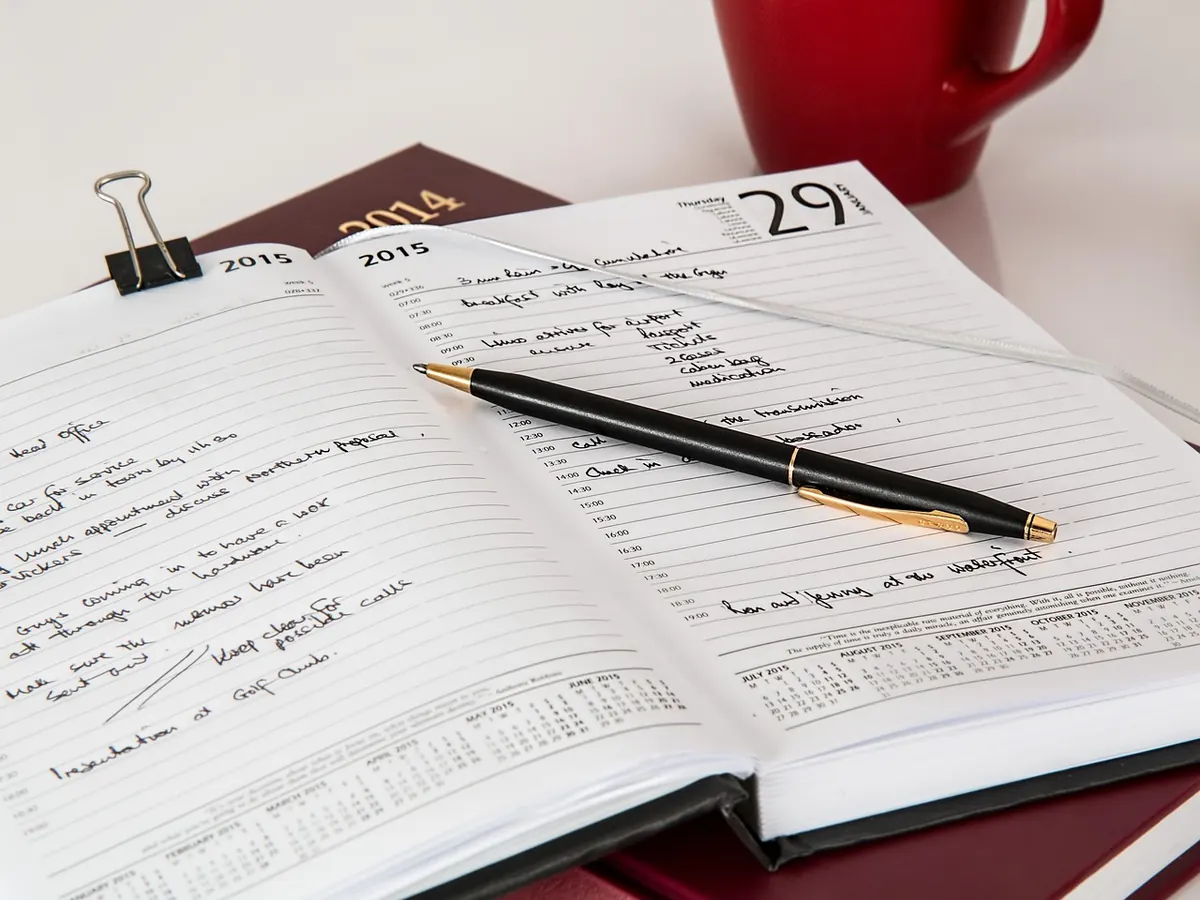
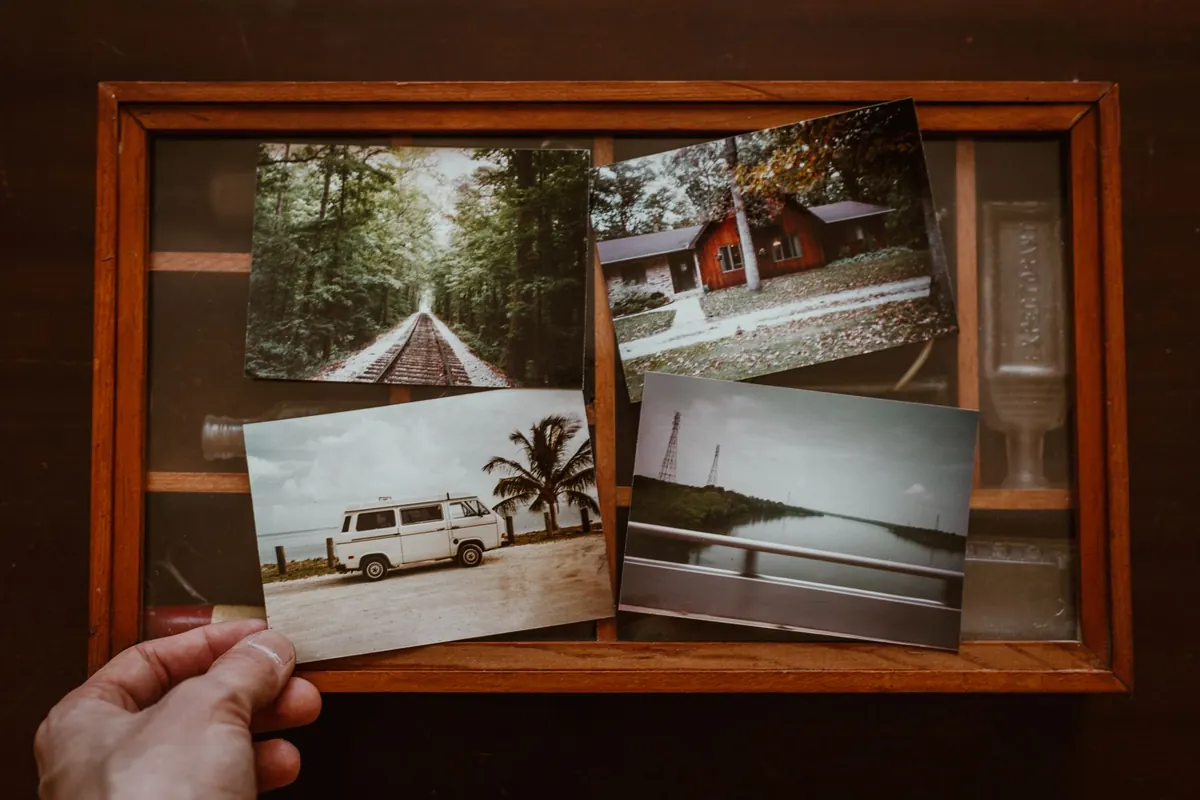
Keep the notebook where you sit, or use a notes app with a weekly reminder. If something strikes you while you're out, record a thirty-second voice note or take a photograph and add three lines that evening — a photo without a caption loses its meaning within a year. A short weekly review is also a good moment to fill the gaps you skipped.
You will miss days. Leave them blank. Gaps are honest, and a page written in a bad mood on the day is worth more than a tidy one reconstructed months later.
Some memories are heavy. If writing about grief or a difficult period starts to feel like too much, put the pen down and return to it another day; talk to someone you trust, or a professional, if it stays with you. Recording the past should sit alongside living now, not replace it. Five minutes and one honest detail at a time is plenty.
Photo: Josh Hild / Pexels